Change your life by
managing your money better.
Subscribe to our free weekly newsletter by entering your email address below.
Subscribe to our free weekly newsletter by entering your email address below.




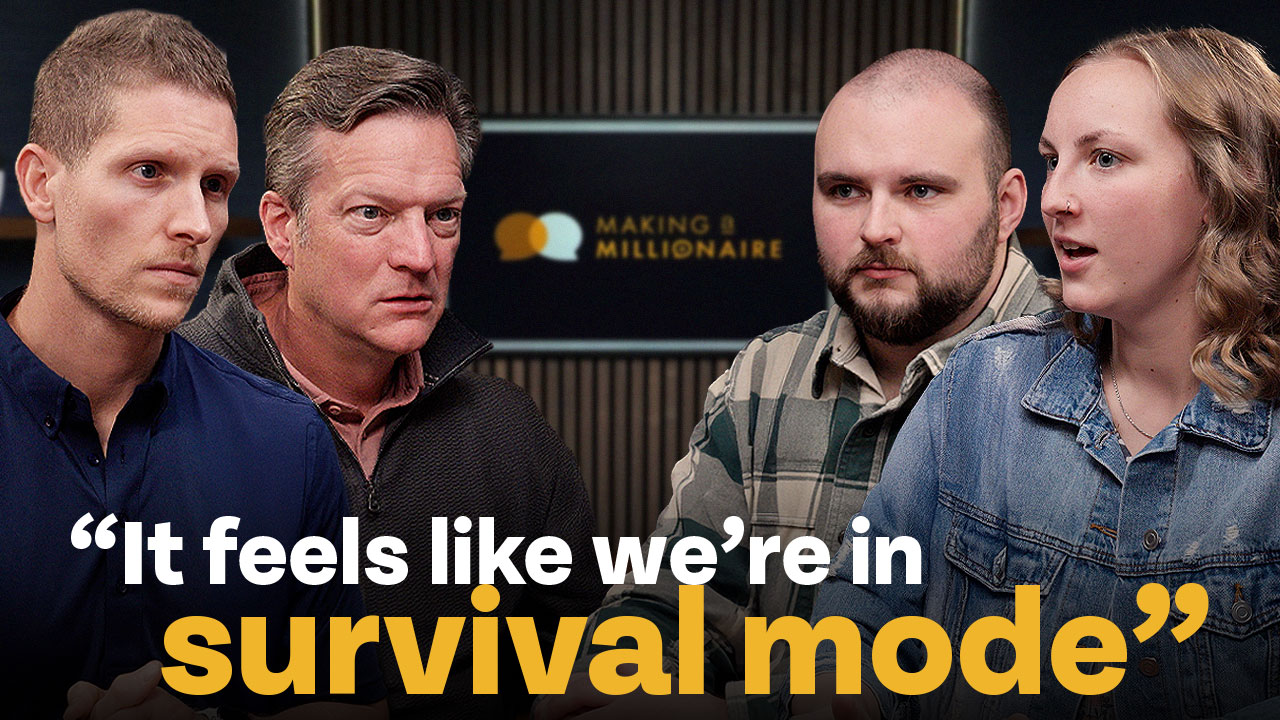
Robert and Keri have a…unique lifestyle. But has such a frugal lifestyle cost them huge opportunities? Let’s dive in, and find out.
Learn more about how you can incorporate millionaire habits into your own life and master your money mindset. Cultivating a healthy relationship with money doesn’t need to be difficult, but just like any other habit, it must be practiced and perfected over time.
Subscribe on these platforms or wherever you listen to podcasts! Turn on notifications to keep up with our new content, including:



Brian: Welcome to Making a Millionaire where we help our guests discover their Great Big Beautiful Tomorrow. I’m your host Brian Preston joined by Mr. Bo Hansen.
Bo: And that’s right—we are so excited that we can help walk you through the stories of millionaires and millionaires in the making and today is no different. Brian—we are right now sitting down with Robert and Keri. How are you guys doing today?
Robert: We’re doing great man.
Bo: I am so excited to talk with you guys because you are a little bit different. A lot of times we sit down and talk with folks who are building towards financial independence and they’re trying to get there and they’re trying to get to the top of the hill. And you guys have done it. You guys are now on the other side of the equation—getting to live in your financial abundance. And I’m excited to dive in. So walk us through—what’s your story—who are you guys—where are you from—what’d you do—how did you end up here in studio with us today?
Robert: Well we both are—we from—we graduated college. We—grew up in middle class families—maybe mine was a little lower class/lower middle class than hers. We were both—I think—primarily the first to graduate—college. We were blessed to not have college debt. We both did well in high school and had we—you know—had our scholarships and things to be able to fund a lot of that. So we were set on a good footing to come out of that. We both—we both worked for a living—worked hard in high school and then as well as—in college and then and then afterwards and then ever since then. We’ve tried to start off our marriage with a—the basic premise of living well below our means. Yeah—great. And—so we pretty much lived like we were very poor—I think—misers if—you want to call it that—financial misers for a little while. So that—that basically set us on a good trajectory and then ever since then we were blessed to make more money. We were never really rich—in terms of income. I was just an entry level IT manager at the greatest never anything beyond that. But we live below our means and saved and then ultimately we were able to retire at age 54. So we have two kids—they’re both in their late 20s—they both have advanced degrees and are doing really well and on their way as well.
Brian: I think you’re underselling yourself on your success in the fact that that discipline muscle obviously was very strong—worked incredibly well because we’ll share in a minute how successful you guys are. But I loved how you talked about—you essentially—small incremental decisions—that discipline stacked on top with enough time really created some amazing things. Keri did you want to add anything to this journey? Because you’ve also been some adventure seekers too.
Keri: We have. I was just going to say—and I—I did not work for a lot of years. We homeschooled both of our kids all the way through high school. But when we got married we knew that I probably wanted to stay home with the kids so we lived off just one income. It’s incredible. Whatever I made just went to the savings account. But yeah—since we’ve retired we hiked 600 miles of the Appalachian Trail and then we bought an RV van and we’ve lived in it for two and a half years—full-time—and then just recently bought a house.
Bo: That’s amazing.
Bo: So—okay—so you guys were able to retire at age 54—that means you must have made every single financial decision correct—like you did everything right—was that your experience coming through making financial decisions?
Robert: I usually tell people I say it—financial independence comes at maybe a million good decisions and then you try to shelter from the ones—the bad ones that you make—you just avoid the catastrophic ones—right? We all make bad decisions. I—you know—and I’m sure we’ll talk about some of those. I think about—I think about like a Roth IRA was one of those—you know—when Roths first came out because we’re older—we remember when they came out. And I remember telling her because there was also a lot of talk back then about a federal sales tax—that there was talk about getting rid of the income tax and the federal sales tax. And I said—I don’t know that I trust that they’re going to honor a Roth correctly because if I did a Roth and paid taxes on it and then all of a sudden they do a sales tax—am I going to get it doubled up? So we never did Roth. Okay. So just as an example—we never did Roth—lack of trust of the government helped—
Brian: I notice you’re from Atlanta or from the Georgia area and you talked about the fair tax—we’re both from Georgia. That is the John Linder—Neil Boortz—you obviously listen to talk radio—they got you scared and you ended up not doing the Roth IRA. I think Clark Howard would be very disappointed in that. But it’s—but I still—I couldn’t help but notice those—when you started talking about these things I was—that’s an Atlanta influence going on right there.
Robert: So I just remember our first year when we had a—we were doing okay. I had a interesting job in college—that said us—we had at least some savings and—and but we—and then I had a decent job coming out of college and we lived like we were dirt poor. We drove our 12—15-year-old cars that the paint was peeling off. We went out to eat once a—once a month and it was usually Wendy’s—it was—a—not a Happy Meal—value meal—value meal—value meal at Wendy’s—can we keep it under 10 bucks once a month to go out to eat and that was our big—you know—thing. And I remember we were at—at church and they had a marriage retreat and we went on this marriage retreat. And I realized on the bus going on the marriage retreat I said—we never paid for it—and the church thought we were so poor—okay—they sponsored you—they sponsored—we got a—we got a scholarship. And I mean to be honest we probably had $30,000 or $40,000 in the checking account at that point and just never lived like—but because we lived that—literally the millionaire’s next door—I mean that’s literally what you’re defining. And I remember just—begging our pastor—I’m—we can afford to pay—you know—for the—
Brian: But I do have to ask because these things—you guys have—y’all transition—because I understand some of those early discipline—good decisions that might seem extreme to your peers and relatives are what—were those small decisions that led to big results down the road. But did you have a transition at any point in time where y’all actually started leaning more into the experiences and things like that?
Robert: I—well I would say I mean you—you know those better than me probably—we had a lot of good experiences. We’ve been able to travel and do cruises even—
Bo: So not just in your retired state but even while you’re working—while you were raising kids—
Keri: We were able to take the kids to Europe a couple times and we’ve done a lot of—done a lot of great things.
Brian: That’s awesome.
Bo: So—but do you consider yourself cheap still or do you think you’re—
Robert: Oh I’m still cheap—I mean we still—
Keri: Oh yeah—
Robert: We still book—we still book inside guaranteed cabins on a cruise ship and hope to get upgraded. We still—we don’t—we don’t buy the drink package—we don’t—you know—we won’t buy a soft drink on the cruise ship. I mean it’s—if we buy one that’s—a big deal. So—so—but we’d much rather do a lot of experiences—I mean at lower cost than dazzle your basic life essentially by doing these things.
Brian: And just to give you guys credit—we pay for all of our guests to have nice hotel rooms and you guys brought the RV up instead of it. Was that out of just you’re more comfortable because you—you got everything set up the way you want it?
Robert: Well it was—we didn’t know—it was—it was pretty cool this time because of the weather but it was—when we’re—we’re doing this—but no we—we enjoy it and then we also—I’m just always a cheapskate—
Brian: I love it—it’s—I love it because it sounds you are but you’re still able to enjoy life and that sort of thing.
Bo: So I’m curious now—so again—you’re in financial independence—right—you’re in retirement—you’re doing the things that you want to be doing. What are some of your concerns now? What are the things that obviously I imagine while you’re working you’re so worried—are we going to have enough—are we going to be able to retire—are we going to be able to get our kids through college—out of the house. But now it’s a different set of worries. And so what are the worries you have now—what are the things that you guys think about when it relates to financial goals or concerns?
Keri: I mean I think you’re always thinking—is that’s the right amount of money—how much can we spend each year because you don’t know how long—you know—you need this money to last or how much you’re going to need in future years. And so it’s always a little bit of an equation to try to figure out what the right answer is.
Bo: How have you guys been answering that—how do you answer the question or how have you answered the question—do we have enough and how much can we spend?
Robert: We don’t—we don’t think of it as how much can we spend—I mean to be honest that’s never—we don’t do—oh if I take 4% of my net assets I could—then I’ll just go spend that amount. It’s—what is the—lifestyle that we’re trying to live? And then—and then how does that really fit with this. I—I will say related to that—one of the questions that we have—it’s a complicated question—I don’t know how to say it really well—but it’s—we use the Healthcare Marketplace. So which is so dependent upon your income. Yeah. And your income is so difficult to predict—you know—with how you—what capital gains are and dividends and things like that. It’s really—you’re just sort of guessing at your income and it’s such a huge variance on that about the choice that you make about healthcare. Because if it—if all of a sudden we have really higher income then a different choice would probably have been a better choice than using the marketplace.
Bo: So you don’t want to let the tail wag the dog too much but that is definitely one of the things—every year when we do our taxes we’re—I don’t know how much money did we make last year?
Keri: I mean part of it is we just know—you’re going to pay taxes—so if you do this you’ll pay taxes on this money—if you do the other thing you’ll pay taxes on the other money and you just have to be okay with that.
Robert: We also strive to not be anxious about things. It and—it just—I mean part of that is being blessed to be honest. It’s a little bit easy to not—not be anxious—you know—when—when the van needs a—you know—because it’s a Mercedes Sprinter—right—so anytime you go to get work done it’s always $2,000—Mercedes—it doesn’t matter. I’ll just give you $1,800 just to start—you know—it doesn’t. So—but you try not to be anxious about that and—you know—part of that is the blessing of—of having some resources—right.
Brian: We’ll get into it in greater details but we did notice even when we were looking at your investments, for somebody who’s now living off of your resources and assets, you’re still equity heavy. Is that something that—how did you come to—because have you always—I mean it’s fine—you know—there’s this whole life change—when you’re younger you want to be aggressive but usually as you start living off of the assets you dial it down a little bit. But when we looked at your stuff—y’all were pretty lean on cash. Now there’s some lifestyle things that happened recently that’s more of a timing thing. But I did notice on the asset allocation—very very heavy on—how would you describe your portfolio—is it an aggressive portfolio—is it a conservative—
Robert: I would say it’s aggressive. A few things about it. One is we have—we—you’re—it’s always a struggle about how much you’re going to spend in a year. It’s one of those things—I remember asking people and it’s hard to get people to be—because people don’t want to be—they don’t want to be perceived as prideful and—and it’s always personal—you know—personal finance is personal. But—but we were just trying to figure that out because it’s hard to really just budget from—working to retirement and what is your lifestyle going to be—what—you know—what choices are you going to make. So we’ve basically figured out that so far we’ve been spending about $80,000 a year. Okay. In retirement. And that’s just total—that’s everything that’s healthcare—you know—giving—you know—everything that we—travel—all that kind of stuff. And that really helped us a lot to have that idea. Now we have had some lifestyle changes recently. I’ll go ahead and share that—we’ve had our second grandchild—oh congratulations—and I think the second grandchild sort of—I say it’s a gravitational pull that says—maybe we’re not—maybe we’re not just going to live in the van full-time—and be away too much to miss too many of those opportunities. So we did make the choice to buy a house. So we’ve—we had—we had no car—all we had was the van—we had no—just to be clear—we had no house. We sold our house in 2022—literally living out of a van in—yeah—I mean when I mean the day that we handed our keys to the new owner of our house and it was a fairly large—10-acre house in—county in—near Georgia—it was a seven figure transaction—right. Yeah. It was seven figure transaction and we owned it outright. So—so we—so we handed those keys over and that day we got on the—we went to the Appalachian Trail to get on. So I mean it was—the storage building was—so awesome—crazy. And at that point we had already—ordered our van. It was in the height of—when RVing was really crazy so we paid top dollar pretty much for the van and—but it—and there was a—backlog on it. So the van was delivered in June—so we left in March and went out on the trail in June—and then got off the trail in June when the RV was ready and then just hit the trail in the RV. So we’ve been doing that ever since—living in the van—and then in October of 2024 we bought a house and another car—just so we have another car. And so it’s been a—it’s been a journey.
Robert: So—so now we’re trying to figure out what our—what our expense model’s really going to look like.
Bo: because now you have a mortgage again and there’s some stuff then and carry costs that maybe weren’t existing previously—at least in the early stages of retirement.
Robert: So we’re trying to reset that. Obviously we—we could just pay cash for the—the house but we—we just decided not to because I mean we’re—we’re doing okay with the investments—they’re—they’re doing okay. The interest rate’s not great—we’ll probably refinance—right—if we decide to keep it. It’s right under six—5.8—somewhere around there. Yeah. And we put 25% down. So we were carrying a good amount of cash—especially when interest rates when cash was paying really nice—it wasn’t too bad. So—so we had that. We had—we had basically three years of expenses in cash—right. So—you know—when you say it’s an aggressive portfolio—it’s—yeah—but I’m carrying three years of expenses in cash—were—were three years of expenses. So now—well that’s why we’re—we’re—we’re currently drawing down $9,000 from our post-tax investments—great—and we’re trying to reset that to see if that’ll replenish some—a little bit. We’re—we’re honestly not sure because we had nothing—I mean we—we were shocked when we emptied our storage unit which was a 10×20 storage unit—not very large—and it was mostly just furniture and like a piano and stuff like that. And it’s—oh we don’t even—I don’t even have a rake—I mean—you know—it’s—all of a sudden you’re resetting going—oh we don’t have—so we’re—we’re having to restock some of that house.
Bo: I love that—what you said is—okay the way that we got to where we are is by making just small decisions. But obviously for folks out there listening—they’re hearing—hey these people were able to sell their house and live out of a van and they—must have—they must have a pretty healthy financial situation.
Bo: I thought it’d be nice because you guys were kind enough to share a net worth statement—let’s kind of look at sort of where you guys are presently. So when we look at your current net worth—you’ve already alluded this—you beat us to the punch—you’ve only got about $54,000 in cash but it sounds there’s a strategy to get that number to a targeted goal. And you said that your burn rate is about $80,000 a year. So if our goal is to have somewhere between 18 to 24 months of expenses—I imagine your cash goal is going to be somewhere around $120,000 to $160,000—is that what you’re thinking?
Robert: My guess is it’ll be a little higher than that—well we’re also not—we think our burn rate’s going to be a little higher with the house.
Bo: And what do you think the burn rate will be?
Robert: I mean I think it’ll be $100,000—if I had to guess it—it—
Brian: But by the way that’s still not really going to stress your level of assets—I mean—so you didn’t hear us—we give any anxiety ourselves—it was—it was actually that’s very within reasonable./p>
Bo: And then when we walk through the investment portfolio—you have—really—you already mentioned you don’t have a ton of Roth assets because you didn’t do the Roth—we’ll talk about that in a moment. But in terms of the other two buckets and the three buckets—it’s pretty—it’s pretty interesting. You have a lot of after-tax assets split between two joint accounts—about a million—$50,000 there. Why the two joint accounts—is there a reason that you have two separate after-tax accounts?
Robert: I had a Vanguard account for a really long time—one of my bad decisions was I used a—a—a very large financial management company. I think this was actually pride in the—when I was in my 30s and I thought I was becoming—big money—big deal—so I went to a large brokerage house and I said—why don’t you manage some of my money. And they really did a poor job—it didn’t last long. But—but the funny thing is—I know my personality is I’m pretty good at buying stocks—I’m horrible at selling stocks—like individual stocks—
Bo: Individual stocks—well that’s the hard part—you got to get it right twice—right—
Robert: Twice. And I because I just question it and I doubt and I—I—I second guess after the fact. So—so the funny thing is that when they—when we—when we dumped those guys we just transferred all of their assets into Merrill Lynch—I’m sorry not Merrill Lynch—into—to Vanguard. Okay. And one of those accounts is my Vanguard account—got it—okay. And so we just—and honestly—the only time I’ve ever sold those holdings that I’ve held for 20 years is when I’m donating cash transaction. So I take the things with the biggest—capital—capital gains and I do—do that for a donation or the one time we bought a—we bought the car.
Brian: So you’re donating it directly to the charity—that’s—that’s great.
Robert: So that’s what we’ve been using that account for—it’s been—so the holdings in that are really not great sometimes. But I’ve never done anything with it.
Bo: But so this is a big chunk of your assets—we’re talking about—if your total investable portfolio was about $3.8 million—we’re talking about a million bucks that’s in these accounts that are—
Robert: No brokerage number two is managed—it’s the brokerage number one that is the $51,000. The brokerage’s number two is pretty well managed and actively managed. We have somebody else doing it. And primarily it’s because we want to enjoy life. Yeah. And I know how I am—I know I would sit around watching Fox Business or CNBC and I would just get consumed with analyzing what to do. And I just—we just don’t want to do it. It’s not that complex and it just helps us to enjoy life.
Brian: I know the curse—I want our audience to hear it because you’ve—you just said I’m good at picking stocks and I want to echo that because I think people who actually have record of picking stocks—it still can be a curse. There’s two reasons it really turns into a curse—is because even if you choose the perfect stock—you typically—people will sell it after it makes three to four times what you initially invested because you’re—man I’ve made 300%—400%—you’ve owned it for 3 or 4 years—5 years—you sell it. Well then it becomes the next Nvidia or something like that and you watch it go up 10-fold and then you’re—I should have never sold it at three or four. Well the other side of it is—is that if you don’t sell it—because even when you’re making money—when that stock goes down 5%–6%—even though it might only be less than 1% of your total net worth—you find that 100% of your happiness for the day has been wrapped up into the emotional side of. That’s why it is a curse—and a lot—I tell people there’s nothing wrong with vacation money to do individual stocks—it can be very fun—it’s a great hobby. But I—we love index funds—you know—we love—because I think it takes the emotional side out of things and you’re just buying—you’re counting on this ever-expanding economy—the law of accelerating returns and kind of being—
Robert: Can I tell you why—why we aren’t doing index funds and then you can tell us why we’re wrong? It’s fine—I got a thick skin. Part of it—it’s that Healthcare Marketplace thing. So because if I do S&P 500 index funds and I—okay let me just say—I’m not going to pull my money out right before they do distributions—right? I’m not going to consume my life with reading when they’re doing it and pulling all of my money out so that I don’t get capital gains distributions. Then all of a sudden I get a big capital gains hit because these are big numbers and my income—my quote unquote adjusted gross income—has drastically changed. And now my healthcare—I got to pay another $15,000 besides taxes—I got to pay another $15,000 or—you know—$20,000 in—in—in healthcare—just because the mutual fund cut a distribution—right. So that’s the reason that—that worries me and I don’t know if that’s right.
Brian: You could counter that several ways. Maybe—maybe you look at ETFs which would allow you then just to get the dividend because you’re still getting dividend income—we looked at your—your projected—these statements have the projected incomes on there. That’s one way to be kind of more tax efficient so you can afford index funds even if it’s the—even if it’s the mutual fund variety. They’re still more tax efficient than managed mutual funds because it’s the turnover—that manager coming in there and picking the winners and losers that typically is causing those—those big distributions—those capital gain year-end distributions. The mutual funds will have them—because they change and even the ETFs to some degree because they change the portfolio—you know—the—the Kodak of the world disappear off of the—the S&P and then they add the—the Tesla and whatever else is the—the hot stock that joins the S&P 500. So I don’t know that I think that—that necessarily is as inefficient because that’s one of the reasons we love index funds—is they’re very tax efficient. And then the other thing that you have the ability to do—and it looks judging from your tax records you probably were doing this—is when there are significant downturns—2022 or—fourth quarter of 2018 or the middle of—you can do a bunch of loss harvesting where you can go out and harvest those losses and then those losses can be used to offset future capital distributions or capital transactions. So there are ways that you can tax manage it without having that—uh oh—from the—you know—from the portfolio distribution.
Robert: It is one of the things Keri has mentioned and we tried to look at this—it—it seems the tax man’s pretty good about making sure that they get—get some—the system is set up to get taxes—you know. And we really try not to completely get wagged around. I think sometimes people get so consumed with saving—you know—not a penny but a quarter—you know—in taxes that they’re spending an awful lot of effort to try to do that. So we try not to do that too much. But it does sneak in.
Bo: You don’t want to get into a situation where you lose control of your tax circumstance—right? You’d love to have an idea in there where you could control what you’re paying in taxes and not just be surprised. So interesting Brian.
Brian: So interesting Brian—I definitely want to get into taxes but I do want to—there’s one other behavioral thing that you’ve said though that I want—before we get into the tax—because I love taxes by the way—so I’m not going to delay us too much. You mean I love tax planning—I’ve been in the weeds a little bit with it. But you also said that you got this house proceeds—seven figures—and then it just got washed into the market all of a sudden. And then we all know 2022 in hindsight—you know—was not a great year to just throw seven figures into the market. But to their defense—your advisor—eight out of 10 years markets make money—so I mean if you’re going off the statistical norm—it’s okay. But we typically—I worry—I always worry about my retirees—is that you have—because it does hit different when the market goes down 15%–20% when you’re retired versus when you’re working. Because when you’re working you’re just—well I’ll make a little bit more money—it’ll recover—it’ll be okay. You—you said something that I thought was very powerful—you said I didn’t even tell Keri what was going on—because I just knew it would—it would cause—these are the behavioral components. So you probably did have some stress even though it’s not even part of your personality to a degree—
Robert: Not—not very much to be honest—not really very much—I mean because I mean we pulled—$300,000 of the proceeds out and I had that sitting in a Vanguard cash account. So I’m sitting there going—I mean—if I hadn’t done that I would have gone—oh man this is not a—not—
Brian: Then your adviser probably did it exactly right—knowing your personality profile on that. It’s just that for a lot of clients that I see that maybe don’t handle that emotional stuff as well—we typically just—right now you’re going through and you’re dollar cost averaging out to replenish your cash. That’s an aggressive stance which does tie into just going lump sum in—whereas maybe somebody who’s a little more anxiety prone—we would—a dollar cost average those housing proceeds probably over 10 months into—into the market just to cut the corner or—or edge off of any type of volatility that might be happening in the short—
Robert: I assumed my advisor was actually going to do that but because I didn’t tell him—he said—no—I think—somebody says that time in the market or whatever—you know—it’s—it’s a good thing—it’s—well let’s just get in the market. So they pretty much—over—which ultimately it’s all okay now—right? I mean—2023 turned out to be great—2024—it’s great. It’s amazing what a little bit of time can do to save things.
Bo: And so right now as part of your strategy—you’re obviously living off of these assets—you’re pulling money out on a monthly basis to be able to satisfy that $80,000 to $100,000 burn rate. But in addition to that you’re selling to raise cash—is am I—am I—because you’re also doing the $9,000 a month to build up your cash—am I understanding that correctly?
Robert: I mean that’s all that we’re—that’s all that—that those investment monies are doing so yeah—the rest of it is just sitting and—I mean we’re using that—brokerage one account—the—go—
Bo: The goal is to get that $50,000 up to some higher number—$150,000—$200,000. You’re just doing that through a monthly distribution strategy—right—
Robert: And we’re not in that big of a hurry to do that—maybe we should be in a little bit more of a hurry—
Bo: Well it just seems having a nice—I mean right now market has done incredibly well and it seems having an emergency fund in place would be valuable because generally when bad things happen they kind of happen in—in all at once—right? Market goes down and the—the—the Sprinter van breaks down or you have to replace the HVAC or whatever the thing—real estate goes bad—you know—unemployment—inflation—all these things happen at the same time. And so having that emergency fund there is just one of those things—again if you’re looking for peace of mind—things that don’t keep you up—I would begin to think—if my goal is to go from $50,000 to $150,000–$200,000—is that something I should do more quickly than I’m doing right now?
Brian: I also want—one thing we couldn’t tell from planning prep is—because you sent us a tax transcript but it doesn’t really show carry forwards or other things—last year you took a capital loss carry for—you took the $3,000 loss. So I know sitting in the background somewhere you have some capital loss carry forwards. It might allow you to take and fill up your cash reserves today while the stock market at all-time highs—with zero tax impact. It’s something to consider just because we don’t want—I think you’re wired in an incredibly healthy way where you don’t stress out but I’d to make sure that—that stays that way. Because if the market went down 15%–20% and you had to—Apple car turnover—figure out how we’re going to find the $8,000 a month or whatever you need—$7,000 to $8,000—I don’t want you making those desperate decisions for—for nothing. Because now we’re getting into immaterial choices that could have material impacts in the long term if you’re not careful.
Bo: And so as we’re looking at your net worth statement—obviously we have the after-tax accounts and then Robert—you have two different pre-tax accounts. You have your rollover IRA and then you have your 401(k). So you have a big—were there any Roth dollars in that 401(k)—okay—so it’s all pre-tax money now. And then Keri—you have a traditional IRA—all pre-tax—then you have an inherited IRA. What’s going on with that inherited IRA—is that something you’re having to take required distributions from presently—okay—so it’s money that’s drawing out. And did you inherit that—at the time in which you’re going to have 10 years to where you have to—no—it was before that—it was before that—so you’re not going to have to—you’re not going to have to distribute that all inside of the 10-year window—right—okay—wonderful.
Robert: And so far all we’ve been doing is whatever—I mean I think it’s Fidelity—whenever—whatever Fidelity tells us is the required RMD—we just take that currently. But there’s a—we always have that in our hip pocket that we could also go faster with that too—there—money in there that could be tapped into.
Bo: And then on the liability side—you obviously said you borrowed money for the RV—so—you still owe about $100,000—a little under $130,000 on that. And now you have a mortgage—right. So you—while you are financially independent—it is unique that you do have some debt on the books. But I say this all the time and Brian hates it when I say this—being debt-free is amazing but also having the ability to be debt-free is amazing. And I would argue that with a total net worth of $4 million and an investable net worth of $3.8 million—you guys have the ability to be debt-free—you’ve just not chosen to go that route just yet. So you guys are in a really really healthy financial situation right even living off of the $80,000–$100,000 a year. What I’m not—I don’t—to me that doesn’t scream a withdrawal rate that’s super concerning. It certainly seems the assets—you guys are less than 3%—not that we use safe withdrawal rates to drive—but it is a great indicator of how conservative somebody’s retirement is. So y’all are in a solid position. That’s why when I find out you’re so aggressive—you know—Robert gets a little grace because I mean he’s done such a disciplined job of building up assets that it’s okay that he wants to be a cowboy on this part.
Robert: Well I mean I think one of the things that made so much of this possible was when our kids were in college—we—we homeschooled all the way through and then Keri started tutoring at the time when tuition started to be due. And—and she was a private tutor all through their—their college and she made enough money to basically just pay for all of college for both of our—med—med school—I mean—a lot of things. So it not only allowed them to be set up really well—it allowed us to—that and then I—we took all of our stuff—about the same time the house is getting paid off and then—so we’re just taking all of my money and it’s just going into HSA and—and—and maxing out everything that we can max out—
Brian: Hearing you give Keri that compliment, I will tell you one of the things I enjoyed when I was preparing for—for our—our meeting today is you provided us—we had this spreadsheet of net worth over time and it was basically from 2018 to now. And I loved on the far right column—y’all had made personal notes and I felt I was going on this journey with you guys. Because there was the tuition payments were in there—so—y’all—you have your hard work—I loved when you obviously were helping out—there was a car purchase to help out the kids—there—charitable contributions to the church. And it was fun and I loved that I got to see that because I imagine as—as you guys when you get to give compliments to each other and you get to look at your journey and see where your success is—doing a net worth statement every year was—was pretty valuable for you guys because you were doing—obviously you’ve been doing this since at least from what I could see—2018. Is this just an annual tradition for you guys?
Robert: Yeah—we’ve been doing it actually for a longer time. I did something wrong and lost the file somewhere—I think I set a password on it or something because I was really worried about it being—I did something and it just got lost. So it’s been actually for a long time—you know—we basically since maybe about age 30 or 35—we targeted a—a $3 million number—when you talk about knowing your number—it wasn’t with incredible—detail—I think the stuff that you do is more—more detailed. Sure. But it was sort of—I was thinking of it as a—what a withdrawal rate might be and—you know—kind of get—what is the escape velocity or some phrase that—so you get to a point where it’s—it’s making more money than—than you are—than—than—than your salary when you’re building. Because it gets to that point where it’s—okay—my—even a decent salary—I think—you know—at a point I’m making—I’m making in the high hundreds—was probably about the top end of my salary—you know. And then you’re—oh I’m making a lot more money out of investments at a point—right. So but when we started getting close to that $3 million—you could see that trajectory—that’s when you get really serious about—okay we’re getting close. Yeah. And then by the time we saw that we’re getting close to that number—by the time we I think I gave a year’s notice to retire—then we were already at—$3.5 million at that point—you know. And then the market corrected a little bit—we were back to $3 million—but—but it was—as you can see—it’s—it’s continued to grow and build as you—as you guys have been retired.
Bo: Now—have you seen the accounts continue to grow—have you seen the portfolio get larger—which is—which is a wonderful place to be—right? Like if the assets keep growing—what that suggests to us is that you guys are no more at—the pass or fail—are we going to be okay—are we going to be able to retire. It’s more about optimizing—are we making decisions now that are optimal from a financial planning standpoint. That’s where—that’s where we get really really excited because when you know—we love talking about—in financial independence if you have three distinct tax buckets—tax buckets—you get to pick and choose how you pay taxes and where you pay taxes from and what you trigger. And you can do things manipulate your income for ACA Marketplace—resources—or for Medicare IRMAA surcharge things. What’s really really interesting about you guys is you have so much in pre-tax assets and you’re not actually pulling off of those pre-tax assets yet.
Brian: So what’s going to happen is if you continue to spend down the after-tax brokerage account—those pre-tax assets are going to grow and grow and grow and grow—which is a wonderful problem to have. But you know what happens at some point with pre-tax assets—the government says—hey—okay now you got to start pulling it out—now you got—it’s back to Bo’s point that you said—hey the government seems to be pretty good at figuring out they can get the taxes from you. They—they’ve designed the system to essentially create a tax bomb for those required minimum distributions. But they keep extending the age—right—
Bo: One of the things that we wanted to model out for you guys to look—is said—okay—if we think about every year that remains for the rest of your life and we think about every year—and we just assumed age 95—what is each year look like. And we have an illustration showing a little bit of a tax projection of your income. Now we did not know about your inherited IRA—so right there at age 60—that’s when we had assumed that your IRA—your IRA would balloon—right. But what you can see is that every single year if you’re living on about $80,000—and this is all in present value dollars—you’re going to be pretty consistent in terms of the taxable income you show every single year. But then once you get to age 75 and you have to start pulling those required—minimum distributions—instead of getting to live in the 12% tax bracket that you guys are living in now—all of a sudden now you have to jump into the 24% bracket—which eventually turns into 32% bracket—which eventually turns into 35% bracket.
Brian: I have a question Robert—do you think 12% is a low tax rate?
Robert: Oh absolutely—yeah—it’s a dream—
Brian: It’s what—I mean when you pay 12%—you’re—man how is the government letting us get away with paying 12%? But do you think it’s interesting that even though we’ve agreed that 12% is a low tax rate—that you’re not maximizing that? Now we’re going to go back to—you’re going to say it’s my—my insurance—I got insurance premiums to think about—
Robert: No—it’s just because we have—we have enjoyed living life—we’re not—we’re not spending a lot of time thinking about it. And maybe we should spend a little bit more time—I mean that’s fair. But to be honest that’s really what it’s been. I mean we’ve seen all 50 states—we’ve—you know been—we’ve done a bunch of travel—you know—we do about three months of international travel every year—I mean we do a lot—right. So it’s—this is what we want you to do—so we’re enjoying that. But—so—so it’s not—we—because I actually thought about—actually did some of that calculation about a month ago and I said—what if things went well and we stayed the way we were—what is my RMD going to be at 75. And I was—and I think it was $300,000 was the number I kind of did a quick calculation.
Bo: So you can see that—I mean obviously—at the end of this plan—age 95 in today’s dollars—you guys would have about a little under $6 million—right. That—so that’s—in a fantastic inheritance or—you know—assets that you would be able to pass on. But over the life cycle of you guys being retired—you would have paid about $3 million in taxes in present value dollars. When we look at this—what we see is an optimization opportunity that we think has a material impact.
Bo: So there are some assumptions we made. We said—hey—if we were going to implement some planning—we’re going to give you guys an idea of a strategy to think through. Here are some assumptions that we walked through. We said okay—let’s assume that your living expenses stay right around $80,000—you could use $100,000—it’s not going to change the numbers. Let’s assume that tax laws stay the same because obviously—you know—there’s a sunset that’s supposed to happen—but let’s just for simplicity—let’s assume that they stay flat. Let’s assume that your current assets and liability stay roughly the same—you pay down the debt on the schedule you’re going to pay on the debt—your assets grow—you don’t get an inheritance or anything that. We’re going to assume that you true up your emergency funds—we know that’s going to happen in the following year. Let’s assume inflation average is about 3%—let’s say your portfolio on average could make about 7.5% per year—we think that’s pretty conservative—certainly for someone who is equity heavy as you are—but pretty conservative. We said—okay—what does that look like. And this—I’ll say—said what if just in the years that you could maximize the 12% bracket—what if you began a Roth conversion strategy where you began converting some of those pre-tax dollars to Roth in those early years before you get to RMDs. And when we look at how that plays out—it’s pretty wild. So again—all you can see is we’re maxing out up to the top of the 12% bracket. Just by doing that—we’re able to—at the end of your plan—instead of having the almost $6 million—you ended up with—because of that tax savings of the lifetime—you actually end up with an ending portfolio of about $7.5 million—which is a million and a half dollars more than what you’re currently on track for. And your cumulative taxes that you pay over your lifetime drop by about $600,000.
Bo: So let me pause for a second and ask the question—is that meaningful—is that valuable—is that something that—oh man—I’d to have a million and a half more dollars and pay $600,000 less?
Robert: Yes.
Keri: Yes.
Robert: Okay.
Bo: All right—just—I didn’t know—but—
Brian: And what I also love about it is that you think about the fact that—it’s just—you have an—an inherited IRA and right now I mean it’s good because it’s an asset but you—you know there’s some—there’s some accounting you have to do where—you know—you have to do these required distributions every year—there—you got to pay taxes on it. What about if you pass on Roth assets to the kids? Those—they get 10 years—10 years to let them keep growing. That—that’s an incredible opportunity from an estate standpoint and legacy standpoint as well.
Robert: There was definitely a plan to do some Roth—I mean—especially I think there’s—there’s always in the back of our minds—are we really good—are we good. Sure. So before we started making structural changes—I mean we have a tax advisor—I mean an adviser and we—it’s one of our main questions—it’s—okay we’re going to buy a house—it’s going to be this much—we’re going to put this much down—can we afford it—are we okay—are we good—that’s one of the benefits of paying really smart people who live and breathe this stuff—you guys—to—to just look at you and go—yes.
Bo: How are they answering that question—what exercise are they walking through to give you some peace of mind around that?
Robert: He said—if you weren’t good I would tell you.
Bo: Okay—I love it—I love it.
Robert: So that’s just what we repeated to ourselves when we were buying the house. And in fact he even said—in fact there are people that I’m currently advising that I’ve said—you’re not good—you can’t keep doing that. If you keep doing that—I don’t want to be your adviser. And that’s good—we—fiduciary—we kind of want that—that’s—you know—and I know you guys do.
Brian: I do want to point out though on our chart though—is it’s great that we got you below where the 35% tax rate starts—but wouldn’t it be nice—because when I look at that—I’m still—when I ask myself—and you even heard us say it on content—we always say—when you get—if I can get your taxes below 25%—that’s great—that seems historically from a context—low—25% to 30%—it’s kind of in that gray zone when people are deciding between Roth or traditional on their tax savings. Over 30% is a high tax rate. Then you even add Georgia tax rates and other things—even though they give some benefits to retirees. So we—but it is interesting though that we still have a chunk of that money—and me and this microphone are going to have a fist fight in a minute—but the chunk of that money over 32%—I’d love if we could even push that down a little bit.
Bo: So we—we did run another scenario to even optimize a little bit more. Yeah. We said—what if in these early years while we could—what if we even considered maxing out the 22% bracket—not just the 12%—but going in the 22% bracket—what does that do? Well—what it does is while it does increase the tax bill that you would pay in these early years—it buys down that future tax rate that you would have. And this is assuming that tax rates stay flat—obviously if tax rates were to increase in the future for any reason—this would be more viable. And you can see in this scenario—by doing that—and all we did is we increased it up until what we had targeted for your RMD—for your required—IRA to have to balloon—you can see that the end value is almost $9.5 million. Now we are almost $3.5 million more than the original plan that you had laid out and we cut the total cumulative taxes by about $1.3 million.
Bo: Now here’s the way—at least in our world that we do financial planning—we sit down with clients and kind of go through it. We operate under the idea that—hey this is the strategy—this is what we want to implement—but every single year it becomes a year-by-year decision because of exactly what you said. So what we would do with a client is say—hey we’re proposing that you’re going to convert $180,000 to—to Roth this year—let’s see—if we do that and we carry out this plan and we run this through a Monte Carlo simulation—looking at a thousand different iterations of a thousand different market outcomes—do we still have a high probability of success? In the next year we do the same thing. And the next year we do the same thing. So that even as you are making some of these structural changes—it’s not you begin down a path that you cannot deviate from—you begin down a path and then you test and retest and you keep going—you test and retest—you keep going—you test and retest. And you think about—if you over the next 20 years really were able to convert all of the orange that you see on screen right there to Roth—imagine the millions upon millions of dollars you end up having tax-free later on in life. That—that way if you do want to do something—go buy another RV or buy the home or pay for the fill in the blank—you have tax-free dollars that are unencumbered that you can then do that with. It just gives you guys maximum flexibility to do things on your terms—no matter what tax policy is going on at the time.
Brian: So what is it—why did you drop—what’s the reason at 63 that you dropped. So the—the reason we did that is we wanted to—it was a little bit of a—of a—of a goal seek to get it below that—below 32%—that’s where the bracket starts. You could—you could be even more aggressive and you could take this all the way out till 75. This is less prescriptive and more—we want you guys to be thinking about—hey—these are strategies.
Bo: It’s just you said—man when the Roth came out I didn’t jump on it—now sitting here I wish I would have. I love the fact that right now in retirement you guys are enjoying your go-go years—you’re doing it—you’re loving it—you’re doing it. What I don’t want you to do is get to age 65 when Medicare starts and now you have to worry about IRMAA premiums and you think—man I wish I would have converted when I was in my early 50s—I wish I would have converted in my mid-50s. If you can begin thinking through some of these things now—your future self will likely think—you—the same way that yourself today would think—that younger man—if he would have been funding Roth IRAs back then. And—and it’s—it’s back to that whole mindset of small decisions today—because these—we—these wouldn’t be heavy lifts currently. Even just getting to the full 12%—maxing out that 12%—is going to get you in a lot better place. And that’s not even going to cost you much money. So it’s a small decision to really create big legacy results.
Brian: And—and I had this conversation yesterday with a client because we’re—we’re doing this with actual clients here at the firm. And they said—well what happens—because we just had an election—what happens if tax rates get extended or even maybe get lower? And I said—well look—all the—all the things we convert today at—still—these good historic rates—if—if you tell me that they extend or even expand the—the low into lower taxes—what do you think the stock market’s going to do? And I was—it’s probably going to go up under the optimism of that—more people are going to be able to do this. And I was—so you’re going to have this chunk of money that you just converted that’s going to be tax-free—it’s going to build incredible legacy for your kids to pass down. It—it—it—it’s kind of a great benefit. And then I played it the other side—what if taxes—because we all know the—the federal balance sheet is pretty big—it’s heavy with a lot of liabilities—what if they decide they can’t extend it? You’re going to be very happy that you locked in those tax-free dollars when you could—before the clock in the buzzer rung—that now you have to pay even more taxes. And the idea that they can grow tax-free for the rest of your lives plus 10 years of your kids’ lives—I mean that’s a huge—it’s a great legacy building thing.
Robert: I think we probably are letting the healthcare concern—I mean part of it is we just have to make a decision—you know—because honestly we’re both fairly—we don’t have significant issues. So but we just—you know—have to make those decisions about your healthcare choices. It’s just kind of a weird system that we have here because there are other options that we could do—a—a medical sharing account—right. So we could do that which is actually more costly but it wouldn’t really be more costly than if we tried to stay with the marketplace if we had a higher income—right—or if you had higher income and you paid more—
Bo: You weigh—okay—this is additional cost but if at the end of the day I end up with $3.5 million more—was it a justifiable cost based on what I have going on?
Brian: We all have to be careful—I always pick on people when they let that tail wag the entire dog because as much as I love tax planning—I don’t want you trying to save just a little bit here and there and impacting your full decisions. Everybody has their own tails that they’re worried about wagging. For you—I—I could tell immediately when you brought up the subsidy you’re getting on the exchange—that’s something you’re really putting a lot of value to. But I do think you—I would encourage you to—to—to really look at the broad picture and see all the other things that it’s also impacting. Because I don’t want that to be the decision matrix that’s keeping you from these great legacy building opportunities and long-term tax minimization strategies too.
Robert: The other side of it is also just the fact that I’ve got to pull funds out of the market in order to pay the tax bill—right. It’s not I don’t have any income really—right. So—so then just thinking through the mechanics of all of that—you know—you’re trying to rebuild your cash reserve but now I also—I’m going to have a bigger cash hit and it’s—it’s okay—it’s just a consideration.
Bo: It’s another one of those reasons why having—if you did—one of the things that I would think through is—if I did have two to three years of living expenses in cash sitting there and I had that $300,000 in cash and I was going to have a $20,000 pickup on my income taxes because I did a $100,000 conversion—well I know I have the cash there to satisfy that. Another reason why—it—we do our retirees to be super cash heavy—so that when it comes time to make decisions this—where they do get to optimize—they’re not having to pull a bunch of different levers—they know they already have cash there that can be used to satisfy that tax bill. So it’s again—it’s one of those things I would think through—the strategy that I have in place to raise that cash—is that the best strategy? Or if I think the markets are at a super high point right now and I’ve done really well—might I want to accelerate how quickly I build that cash back up?
Robert: So if I have a fairly aggressive desire to get—give—to donate—Roth’s not a good answer—right—generally?
Brian: But you do this in a multifaceted approach and we—we even thought about this because you have some—some appreciated holdings on—on the taxable account—we’ll talk about that. But you also—once you reach age 70 you get that opportunity where even some of these tax-deferred accounts—because you have a lot of them—QCD—qualified charitable distributions. So there’s going to be lots of opportunity to do really good charity tax planning with the way you have your asset structured—if you just have the right person helping you pull the levers on that. But I want to make sure I understand your question about—well I don’t want to be donating Roth money. Sure. That’s what I mean—that’s the—you got enough—you got enough—you’re going to have plenty to do both—I mean that’s the—that’s the big thing. It’s just what I—I see—and this is because you said something that I thought was very powerful that a lot of financial mutants are going to resonate with—they’re going to hear you say that and they’re say—yeah that—why—why are Brian and Bo not addressing that? It does feel counterproductive to sell perfectly good assets that you’ve got invested today to pay taxes on something that you’re not going to have to pay for—it seems—15 to 20 years in the future. You—I’d rather have the money now and I get that. But you have to always take it—you—you—you have to look at this from an opportunity decision of the government right now is offering me the ability to get access to this money tax-free at 12%. If I wait—not only is it the money I have today but it’s the money it grows upon it. And then—and then anything—and all the decisions when it gets pulled out in my 70s—it’s going to be in the high 30s—plus—probably. You at that point you’re exceeding now the income threshold for even some of the state benefits that they give you. You could see that you’re trading 12% for 40%—but you’re also getting all the tax-free growth that you—everything that you did—you’re getting—you see how this now becomes—this is a much more complicated decision matrix. But I’ve done—we’ve run the projections—that’s why we always do these predictions and we use very conservative assumptions there—so you can actually see the net result and even where the break-even analysis is. And—and that’s why I—I would not ask you if I didn’t think it was valuable because I’ve seen the other side of it when people show up here and there—you know—late 60s—early 70s—and they show up with tax bombs and there’s just no planning. I—I was—man if you’d have come to me 10 years ago I could have fixed this for you. Because it’s really the choice could be—how do we want to optimize this. And I’m sure estate attorneys feel the same way when successful people come to them and go—you realize estate taxes are a choice if you plan. It’s kind of the same way as a tax planner—it’s a choice on how you want to take your medicine. And if you wait because you’re—I’m living my best life now and I’ll just pay the taxes—that’s fine. But I think if you’re charitably minded—if you’re—if you’re minded that you want to leave something—a legacy to your children—your adult children who you—it sounds they’re making great decisions on their own—so you want to give them the ability to grow upon that as well—why not maximize this thing with just a little bit—because—I said—sure—maximizing the 12%—that’s—that seems—duh—that’s—that one’s—that one I would fight you on a little bit if you were my—my client. I would be—come on Robert—12%—you don’t want to give the government 12% on this money and then I’m going to let it grow tax-free for the rest of your life. I mean that’s a pretty good deal.
Bo: So you said giving to charity is another goal that you guys have. Walk us through that—how do you guys approach charitable planning—how do you guys think about that in a year-over-year basis and what are some of your goals that you have around generosity?
Robert: We try to live generously. I mean—we use—money is a—it’s a tool. It is—I mean honestly it’s—we use it to—for experiences—if I mean—to be able to spend time with someone. So ultimately we are trying to do that with our money mostly. And then the next thing is we certainly want to be we would love to be able to give generational wealth to our children—great. We live a great life we don’t—we don’t need—we don’t need much more than what our current life is. I know you’ve talked about that—we—it would just drive me crazy to spend—to spend a lot of money at a hotel—really—it really would. I mean honestly I’d be—this shower head’s no better than any other shower head—right. So I don’t think we’re going to really change our lifestyle significantly. We have a great lifestyle. So we’ve been blessed that—that way. So then the next thing is the ability to give. We—that is one of our biggest challenges is figuring that out about—I mean here’s basically what we want to do—we want to at least give 20% of our wealth away—10% to our local church and then 10% to other charities—great. Now—my default answer—posthumously or while you’re living—well that—that’s about what I was going to say because our default answer was—I said—I’m just—we’re just going to put it in the will and I’m going to say 10%—before our kids get 50/50 split of whatever’s left—10% to the church and then probably five other charities get 2%. This is not because I want accolades or we want accolades—it’s—we don’t want anything—make the world a better place—that’s one. So—so if I decide to do it before then—it’s not because I want control or recognition or anything that. It is just because it might make more sense to do that. And that’s one of the challenges that we have not figured out yet is—what is the right approach to be sure that we make it to the end—kind of—financially—we still keep looking at y’all thinking—are you know—are we sure. Yeah. And also what’s the right—what’s the right stewardship—of those assets. We’re willing to do that at almost any time. But figuring out what the right mechanism for that is that makes sense—
Bo: Well at the end of the day—your money is your money and so the right choice of what to do and how to do it very much depends on you guys and how you prioritize your goals. So if one of your goals is to be incredibly generous while you’re living—then you can absolutely use your money to do that. The way that we would counsel someone to go through that is—okay—in the same vein that we said—hey this is what it would look like if we did a $100,000 Roth conversion—let’s now run this through the Monte Carlo simulation and see how that works out. We would do the exact same thing if we said—hey I want to make a $100,000 donation to charity every year for the next 10 years and I want to give away a million bucks over 10 years. Okay—well let’s now run that through the software—whoa—and see—are we okay. And every decision we make—we answer the question—is are we okay. Once you’ve satisfied the are we okay—then it comes down to strategy. Okay—well now how do we give to charity—does it make sense for us to just write checks—do we give appreciated securities? If we’re going to give on a smaller scale—we’re not going to give $100,000 a year but we’re going to give $15,000 a year—because the standard deduction is so high right now—you guys likely aren’t going to itemize most years unless something really really unique happens. So you’d be prime candidates if you’re going to give $15,000 a year—rather than giving $15,000 every year—you donate to a donor-advised fund—$30,000 every two years. So that way on your taxes—you itemize one year—standard one year—itemize one year—standard one year. Or you could decide how to give posthumously—you name the beneficiaries inside your wills. Or there are even estate planning metrics—you guys—right now it does not seem to have an estate planning issue based on current estate laws—but if the estate laws were to change in the future and instead of having $24 million–$25 million lifetime—estate exemption—it dropped down to $5 million or $10 million—you can see you guys are now—you could potentially have a $10 million estate at some point. There are even ways that you can give to charity presently to get assets out of your estate—live off the assets—when you pass away those assets move on. So there are a myriad of ways that you can give—but in our opinion—before you start doing the strategies—you have to answer the are you okays. And that’s running through the—running through the iterations and actually iterating and then taking the steps to move in that direction.
Brian: Yeah—if I—I’m—I’m super excited for you guys because looking at your numbers—we know enough—I think yours is a—both—I think you’re going to be able to do some of these goals after your death if you so choose with that legacy desire. But then I also think that there’s nothing wrong—because this system’s actually going to reward you from a tax and a financial perspective to make some of these gifts in a proactive way now too. You could do—we’ll talk about annual stacking—you know—to charitable gift funds where with some of these appreciated holdings. I also think those—those qualified charitable distributions—once you get into your 70s—is going to be a very powerful thing. And there might even be some family gifting down the road to even—not only help with—hit something you see. But I love the fact because here’s—let me tell you—I mean from a—and this is not to ring the—the—the coffers or the tithe barrels so people are drawing attention to yourself—I think there is something to the fact though—it’s glorious if not only you—you’re leaving this legacy but also if you do get to experience some of the fruit off of generosity. That doesn’t mean you draw attention to yourself but it just means that part of fulfillment is that you get to experience—because you—you—you guys are all about some experience—why not also let the generosity—because y’all—y’all heard the thing—I mean we’re all kids—you know—I’ve—we’ve already made a bunch of Star Wars jokes and stuff. When I was a kid I never understood that whole saying of—it’s better to give than to receive—because when you’re a kid you’re—what’s the toy. But—but as you get older and more sentimental you realize that adage has a lot more power about human nature than we all probably give it credit—is that you guys are in the position where you can be—better to give than to receive. And—and we received a lot—I know—I mean we are blessed people—
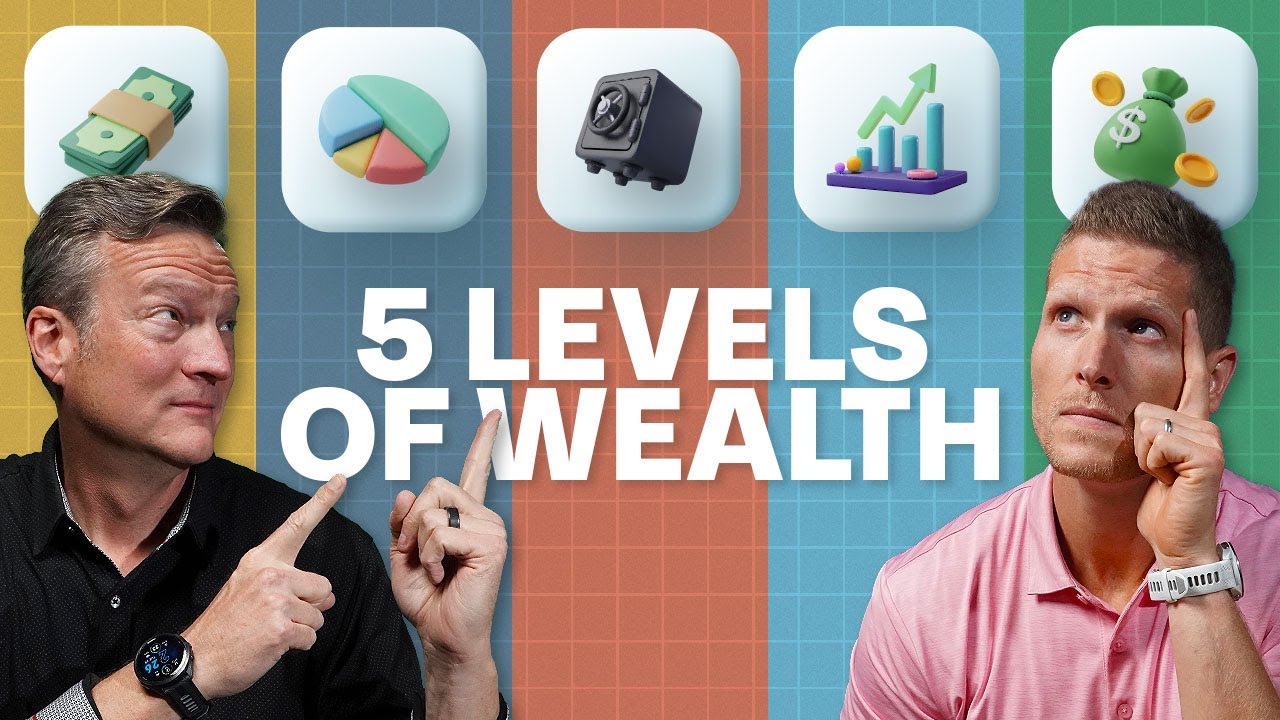
Bo: So but you love experiences—right—and—but I think you’re being very humble and that’s good—you should—you have a—you have a heart that feels—I want to make sure this doesn’t—this is not a pride thing. This is—so you two as a—as a unit—as a couple that loves each other—y’all can even use this as—as something you’ll reflect upon—be sentimental about—is—look at the fruits that you’re creating from a prosperous life and a well-lived life. And—and I don’t know if this is the perfect—I wrote it down—I was sitting here—was something was said—I—I deal all the time where most financial mutants or even people out there in the world who haven’t even discovered our content—I think they all are striving for what we call in the four levels of wealth—freedom. And the saying you hear everybody in the world say is—I—I do what I want—when I want—how I want. And that’s what the typical American—I think when they building—saving and being disciplined they’re trying to get that freedom. I want to give you guys a huge compliment—you’ve gone beyond level four on your wealth—you’re actually into level five—which is abundance—which at the top of—of the food chain—not many people reach because it’s—it’s a completely different mindset and you’re there. I can sense it—I’m just talking to you because now instead of doing what I want—when I want—how I want—it’s now knowing who you are—what you value and what you wake up for and gives you purpose in the morning. And I can already sense it—you’re not moving the goalposts—you’re not trying to expand your lifestyle—you guys get it. And that is—I mean—I think—not that is—very rarified air for people to kind of have resources but also know what gives them purpose and—and—and creates incredible things for their family. Y’all are very good—disciplined individuals who have big hearts and you’ve done really good things.
Robert: Thanks.
Brian: So—our friends still say we’re cheap—I mean I think you do have some—tests of that—I would probably—I mean if you were my client I would probably—we’d have annual—pick on—you know—Robert and Keri moments—where I’d be—what are you doing—I mean why—why—I mean—we didn’t even pick on you yet—I mean—y’all had in your notes—you donate plasma for money—
Robert: We do—I mean—come on—I mean—we—doing—
Brian: You need—you need somebody—I’m the opposite of Suze Orman because every—you know—Suze Orman made her entire career telling everybody no. I’d be—yes—come on—yes—Robert—Keri—yes—let’s do some more—
Robert: I was trying to find a 4-hour window in on Monday when we’re not traveling—I was going to try to find us time because they’re going to give me an extra $25 if I donate plasma. It is absolutely true—I still have the email as a reminder to go—can we squeeze it in?
Brian: Sometimes you’re a mess—that’s hilarious—but it’s just true—it is true.
Bo: How are you guys—navigate—thinking about giving and thinking about how you’re going to do—how will you navigate that—what’s the conversation you guys will have around—what can we do and how do we do it?
Keri: I mean it depends on the need—I mean when a need comes—we partner with an organization in Uganda and—okay—when you know they tell our church they’re going to get shut down because the state has come in—then that’s—you can answer that call—
Brian: Yeah—awesome—I love it.
Bo: But it doesn’t sound you guys struggle with that—right—that’s something you do right now and you feel comfortable with—that’s not a—a point of tension—trying to decide if or can we do that—right?
Robert: I don’t think so—no—it—yeah—it’s—I made the comment about stewardship mainly because we do want to be—we want to be responsible stewards of the resources so that it’s efficient—effective. So we do think about those kind of things—appreciated assets—we donate some of those. To be honest we—we have a significant amount of carryover donations—cash donations—on our taxes that you didn’t see—you probably didn’t see that—probably because your income’s been so low you haven’t been able to capitalize on all—30% rule and so forth—right—yeah—yeah. So—so we—you know—when we sold our house we decided we were going to tithe on the—basically give a 10% to the church on the proceeds of the house—on the capital proceeds of the house. And so we estimated that the house had grown about $600,000—so I mean—you know—that—that helps to have that carryover that’s sitting there. So I mean we’ve been trying to—we try to do that. Now but then we’re also thinking from a legacy perspective and then it just—thinking about when—what the right timing of that. There was some reason I thought that maybe it made more sense for me to—to give that and none of us know when we’re going to die. So I can’t—I can’t say—well a year before I die I want to do this. But trying to think through if there is an advantage to do that—while still alive—rather than just being in the estate. But I don’t know if there is one—maybe there’s really not—
Bo: Well if you are deducting—if you are able to deduct charitable contributions against your income—that’s certainly advantageous. But you guys are already doing that. What I love hearing is if you do have all these carry forward charitable contributions you haven’t used—you can do future—still—itemized—even—even if we do drive up your income through Roth conversions and stuff—you still have tax mitigators there that can offset that. So where you haven’t been able to use as much of those charitable contributions—you have higher income—if you go up into the full 12% or full 22% bracket—now you even get to mitigate that. So it makes the—it makes the tax cost even lower—which makes it an even more compelling argument to consider—
Brian: You really are—I mean that’s what I’m sitting here because—y’all—have capital gain carry forwards—now you’re telling me you have charitable—gain—carry for—I mean—charitable contribution carry forwards. I’m—man you guys are basically begging to—to—to—to get—optimize some of these things because y’all—have all the tools—all the levers I’m looking for to make my—my masterpiece of a financial plan. You’re telling me you have all these things but yet you’re just leaving them sitting over there on the shelf collecting dust. I mean—we got to get to work on these things.
Bo: So we always to send people away with some things to think about—some stuff that you ought to—got the conversation we want you to have. First thing that we saw immediately—item number one of homework is—cash reserves—right—for a retired—financial independent group—a couple—your cash reserves should probably be in a different spot. I love that you have a strategy to get there—I would even think through—should we have a more accelerated strategy—don’t get cute—go ahead and fill up your cash reserves—you have—you have carry forwards—let’s get that—let’s get that boosted up. The other thing I would think through is—we looked at your allocation—you guys are an incredibly aggressive allocation. We didn’t actually go through it in depth but we know that it’s about 96% equity—so it is almost an all-equity portfolio. It’s worked out to the moon—it’s worked out incredibly well for you. The conversation I’d have you guys have is around the why—can we take on all this risk—well yeah—you have enough money—you’re—withdraw—it’s enough—but should we—can we or should we. I would walk through your allocation. The next thing that I think you guys have a homework item is a conversation around—you have made it—you’ve asked over and over—are we there—are we there—are we there. I think we can say by looking at the numbers that it certainly seems you are there. We’re not your advisor so we can’t say for sure but your advisor should likely be able to say for sure. Then the question becomes—now what—what is it that we really want to do—do we want to support our family—do we want to think about the legacy we leave behind—do we want to optimize what we’re paying in lifetime taxes. You guys have to rethink your goals. It’s one point in your life your goal was—be financially independent—retire. Now you got to sit down and have another goal conversation—our goals are in this order—support ourselves for the rest of our lives—leave a legacy—give to charity—support causes we believe in—not pay a ton of tax—whatever that thing is—you guys ought to reprioritize and go through those. And then once you’ve ordered your goals—then you start thinking about the strategy. Okay—what’s the appropriate strategy—if leaving a legacy to our kids is something that’s incredibly valuable—perhaps Roth conversions make a lot of sense in order to be able to do that. If giving money to organizations today that we love makes sense—perhaps we should work into our budget—we don’t live off $100,000 a year—we live off of $150,000 a year and we know that $50,000 of that goes to an organization every year that we support. And then you run that through the Monte Carlo and you test it to see—is this viable. You guys are at the place right now where you’re in the driver’s seat—you just have to decide what you want the rest of your life—what you want the next 30—40—50 years to look like. And I would argue—you’ve spent these last few years being go-go—which is awesome. Now it makes sense to apply some intentionality around just living and experiencing and actually—okay this—what we’r e working towards—does that make sense?
Robert: Oh—thank you.
Keri: Awesome.
Brian: Y’all are still—well in the go-go years—I mean—our age difference isn’t that far—so I’m telling you—you have lots of go-go years left. So that’s why this is so cool that—because you’re not even—you’re still young retirees—so I mean there—just—that’s—that’s back to—you have tremendous layers of—Tom—another one of those levers that—as a planner I would be trying to pull.
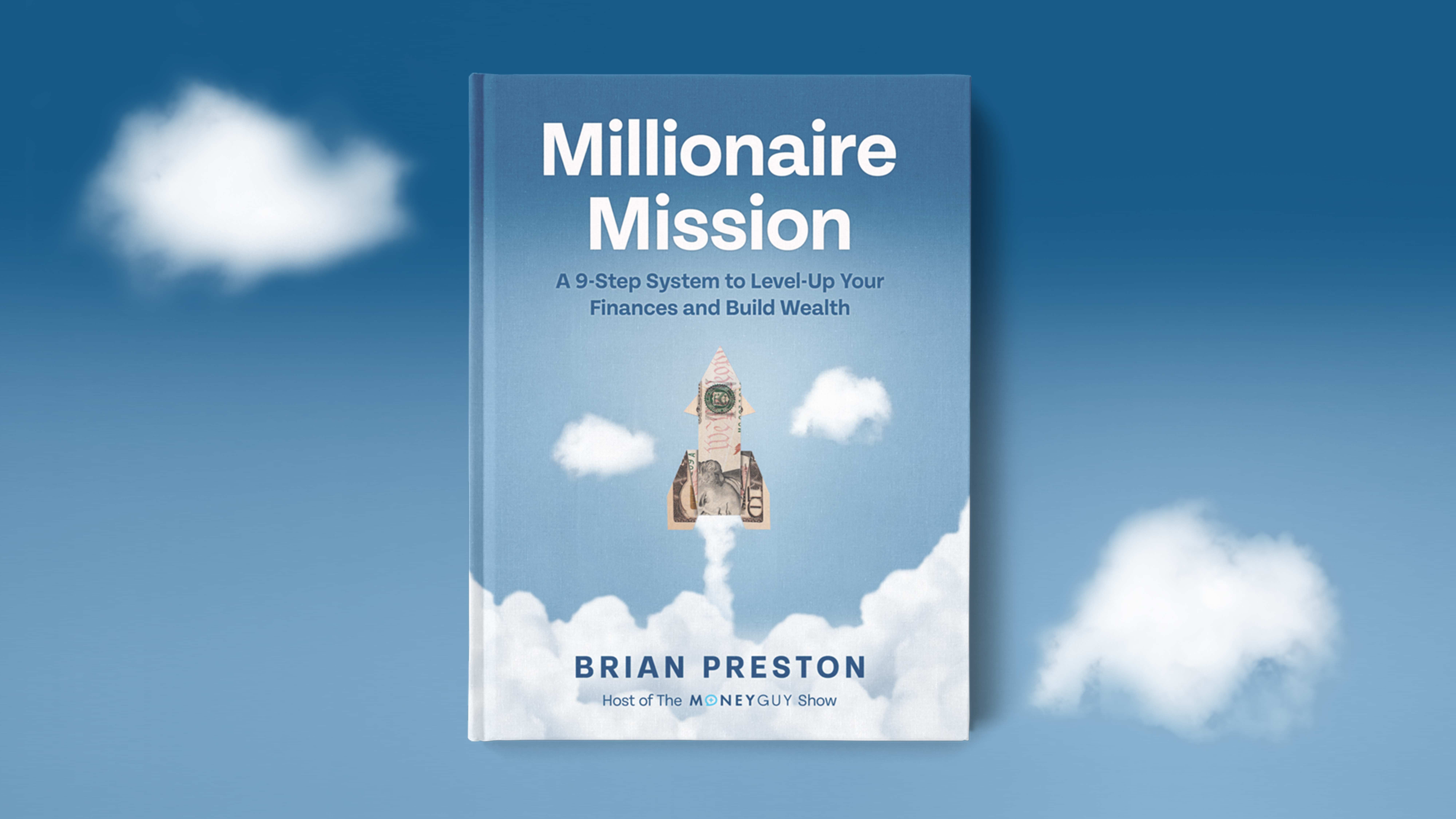
Brian: This has been a blast and I’m hoping anybody who watches this can see that—yeah—those small decisions can create huge results—even with mistakes. I mean that’s why when I was doing Millionaire Mission—I laid out all my mistakes too—is because I want—I think there’s a lot of benefit in paying it forward—doing the experience shares. But I have loved—I mean I’ve gotten at least two or three—harem arms moments—you know—where just to kind of celebrate all the good decisions you’ve made. And I can’t—I can’t thank you enough for coming on our show today.
Robert: We’ve enjoyed it—thank you.
Keri: You guys have been awesome.
Bo: If you would to be a guest on Making a Millionaire—you can go to moneyguy.com/apply—or you want access to all the resources we make available—you can go to moneyguy.com/resources—so that you can do money better.
Brian: Guys—thanks for joining us—this has been a blast to meet some financial mutants—hearing about their Great Big Beautiful Tomorrow. I’m your host Brian Preston—joined by Mr. Bo Hansen—Money Guy Team out.


When Should I Claim Social Security?
Social Security can have big impacts on your retirement. However, knowing when to draw your benefits isn’t a one-size-fits-all decision.…
View Resource
Tax Guide 2025
Know the tax rules so you can keep more of what you earn. Ever wonder what the highly trained professionals…
View Resource
Tax Guide 2024
Know the tax rules so you can keep more of what you earn in 2024. Ever wonder what the highly…
View Resource

How about more sense and more money?
Check for blindspots and shift into the financial fast-lane. Join a community of like minded Financial Mutants as we accelerate our wealth building process and have fun while doing it.


It's like finding some change in the couch cushions.
Watch or listen every week to learn and apply financial strategies to grow your wealth and live your best life.
Subscribe to our free weekly newsletter by entering your email address below.